


Dry socket is a complication that can emerge in the days following the tooth extraction. How does this complication arise? How long does it last? What is the recommended treatment? Below, we answer your questions.
What is a dry socket?
After a tooth extraction, the alveolus, the bony socket where the tooth roots sit, is exposed. Under normal conditions, a blood clot forms over it, which protects the nerve endings while the initial stages of healing begin. Sometimes the blood clot fails to form, dislodges or becomes contaminated. When this happens, the bone and nerves are exposed, causing a painful inflammatory process called dry socket.
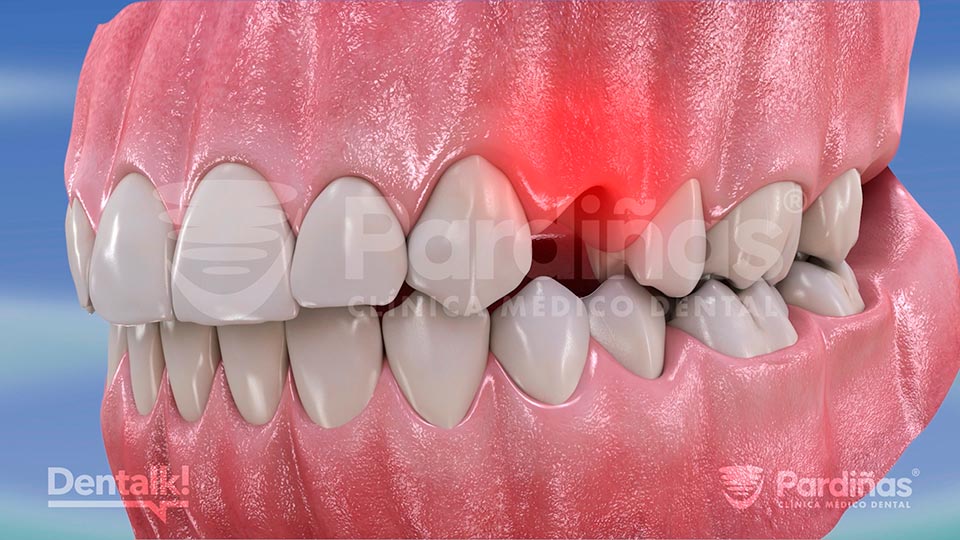
What does a normal healing process look like?
Before going deeper into this condition, it is important to understand what a normal healing process looks like so that you can recognize if something is going wrong and act in time. In an uncomplicated recovery, the process begins within the first few minutes after the extraction. Blood flows into the area and a clot forms thanks to the action of platelets, which stop the bleeding and release substances that trigger tissue repair. This clot acts as a temporary matrix that protects the wound and serves as the foundation for healing. During the first few hours, the body’s defensive cells clean the area of tissue debris and bacteria. Leukocytes and macrophages help control inflammation and prevent infection, which is essential for healing to progress normally. In the following days, fibroblasts migrate into the wound and produce collagen and other components that stabilize the repairing tissue. At the same time, new blood vessels form, restoring the oxygen and nutrient supply needed for healing. Around the first week, bone remodeling begins: some cells resorb the damaged or residual bone, while others begin to form new bone. In addition, the clot starts to be replaced by whitish or reddish granulation tissue, and the edges of the gum begin to come together to close the socket. Although the gum will appear closed within a couple of weeks, the alveolar bone will continue to mature and reorganize over the following weeks until healing of the socket is complete. The healing process can last several weeks, although discomfort usually decreases significantly within a few days if healing progresses normally.
What is the cause of this complication after tooth extraction?
However, as we’ve already mentioned, sometimes this healing process doesn’t go as it should and can lead to this condition. The exact cause of alveolitis is not known for certain, but it is mainly associated with premature dissolution of the blood clot (fibrinolysis). There are also several risk factors that favor its development:
Alveolar contamination
If proper oral hygiene measures are not followed, food debris and/or bacteria can be introduced into the socket and contaminate it, eventually destroying the protective clot.
Excessive trauma at the time of tooth extraction
This type of problem can occur when a complex tooth extraction is performed with excessive force or with a less-than-delicate surgical technique.
Systemic and genetic factors
The use of oral contraceptives or certain genetic predispositions can alter coagulation and healing.
Tobacco
As with many other aspects of health, tobacco is harmful and one of the main risk factors for developing alveolar osteitis. Tobacco reduces blood flow to the area (ischemia), and the act of sucking while smoking can physically displace the clot.
What are the symptoms of dry socket?
Since the nerve endings have been exposed, the most characteristic symptom is an intense sharp pain which does not subside with common painkillers and usually appears between the first and third day after the procedure. In addition, there are other symptoms that may be related:
- The intense pain after a tooth extraction can radiate to the ear, temple, or jaw.
- Bad taste in the mouth and bad breath (halitosis).
- Presence of an empty socket or one with grayish-looking tissue.
- Swollen submandibular or cervical lymph nodes.
In more severe cases, fever and general malaise.

Types of dental alveolitis
Depending on the symptoms, we can distinguish two types of alveolitis after extraction:
Dry socket
In alveolar osteitis, commonly known as dry socket, the blood clot has not formed. Therefore, the socket is empty, leaving the bone directly exposed to any external stimulus: air, liquid, food. The pain is neuralgic, very sharp and persistent, because the nerve endings are completely unprotected. In addition, it is common to observe that the walls of the bone have a whitish color, and the patient often reports a characteristic foul breath due to bacterial degradation in the socket.
Suppurative alveolitis
In this case, the alveolus is not empty, but rather contains a clot that looks dirty, dark, and has a loose consistency. Unlike the dry form, this involves an active infection or the presence of a foreign body, which leads to the formation of inflammatory granulation tissue. Clinically, the patient typically presents with more pronounced swelling in the affected area, severe pain (though sometimes less sharp than in the dry form), and, in many cases, obvious pus discharge that produces a very unpleasant and persistent taste in the mouth.

How to prevent dry socket after a tooth extraction
After a tooth extraction, it’s important to follow certain recommendations to promote proper healing and avoid complications. Here are some effective recommendations to prevent its development:
Platelet-Rich Plasma (PRGF)
The placement of platelet-rich plasma (PRGF) in the socket is a method that can help to prevent the development of alveolar osteitis, due to its bacteriostatic and tissue-regenerating properties. This can be done preventively at the time of extraction (especially if there is a history of alveolitis) and also as a form of treatment once dry socket has developed.
What to do on the first day
Initially, a gauze pad is placed to control the bleeding and facilitate clot formation, which should be protected by avoiding rinsing, spitting, or using a straw for the first 24 hours. Applying local cold and resting with the head slightly elevated are also recommended.
Maintain proper oral hygiene
Maintaining a good oral hygiene routine is recommended in any situation, but even more so during the first 48 hours after tooth extraction. Make sure to keep the treated area free of food debris but do it with gentle rinses; the toothbrush could break up the clot.
Be very careful when eating
During the first week, avoid very hot foods, eat a soft diet and try to chew with the molars on the opposite side of the extraction site.
No smoking
Tobacco is always inadvisable, but if you are a smoker and have just had a tooth extraction, avoid it, at least for the next 4 or 5 days.
Alcohol? No, thanks
Avoid consuming alcoholic beverages in the days following the tooth extraction. It can interfere with medication and the healing process.
Take it easy
Avoid strenuous physical exertion for the first 72 hours after the extraction, as it may increase blood pressure and displace the clot. Of course, do not participate in any contact sports that could result in a blow.

How is dry socket treated?
If you think you may be suffering from alveolitis, it is essential to go to the dentist as soon as possible to receive professional treatment:
Socket cleaning
The professional will remove any food debris by irrigating the area with saline solution.
Socket curettage
In some cases, it may be necessary to perform a minor cleaning under anesthesia to induce new bleeding that will generate a healthy clot.
Medication
The main treatment is local and symptomatic with anti-inflammatory and pain medication. If there is an obvious infection, antibiotics may be prescribed.
Home remedies for dry socket
It should be noted that alveolitis is a very painful problem and requires professional intervention, but some recommendations can be followed at home to partially relieve the discomfort. Very gentle rinses with warm water and salt (or saline solution) can help to remove food debris without dislodging the clot. It is also recommended to apply cold compresses on the outer part of the cheek to reduce inflammation and, above all, avoid any type of suction.
How long does dry socket last?
It usually lasts between one and two weeks, depending on how quickly professional treatment is started. Although the most acute pain usually improves significantly within 48 to 72 hours of receiving care at the clinic. Complete healing of the bone and gum tissue will continue gradually over the following weeks. Early diagnosis is key to shortening this process.


